A History of Scilence and Survival
MAR 8, 2026 (10 minute read)
Every year on International Women’s Day, we celebrate the progress women have made towards gender equality. But celebration asks something else of us: reflection.
Reflection on the slow pace of systems to recognize women’s health as worthy of study. Reflection on the women whose struggles were never named. And reflection on the quiet realities many women still carry.
In late 2025, the Honourable Danièle Henkel began the Parliamentary steps to establish a national framework for women’s health in Canada, calling for coordinated oversight and stronger accountability on federal funding. Her introduction of Bill S-243 represents an important step toward addressing long-standing research and policy gaps for roughly half of Canada’s population, when only 7% of national research funding currently goes to women’s health issues.
While this progress is worth celebrating, it also raises an important question: who else must we acknowledge?
We see you. Those who are quietly suffering with an eating disorder:
the young girl feeling like an outsider, bullied or carefully self-monitoring every move for “perfection” or “control” to survive a chaotic existence
the young woman living through trauma, coping the only way she knows how
the postpartum mother, exhausted and misunderstood, alone in her thoughts
the professional navigating perimenopause, secretly seeking relevance
and the many women in between who carried their pain silently for years
Some found support. Some never learned the language to understand what they were experiencing. Some were never given a chance.
Eating disorders today are often described as a modern problem, born of social media bullying or contemporary beauty standards.
But still waters run deep.
A History Deeper Than International Women’s Day
If we are going to talk about women’s progress, we must also acknowledge how far back eating disorders have affected women and girls.
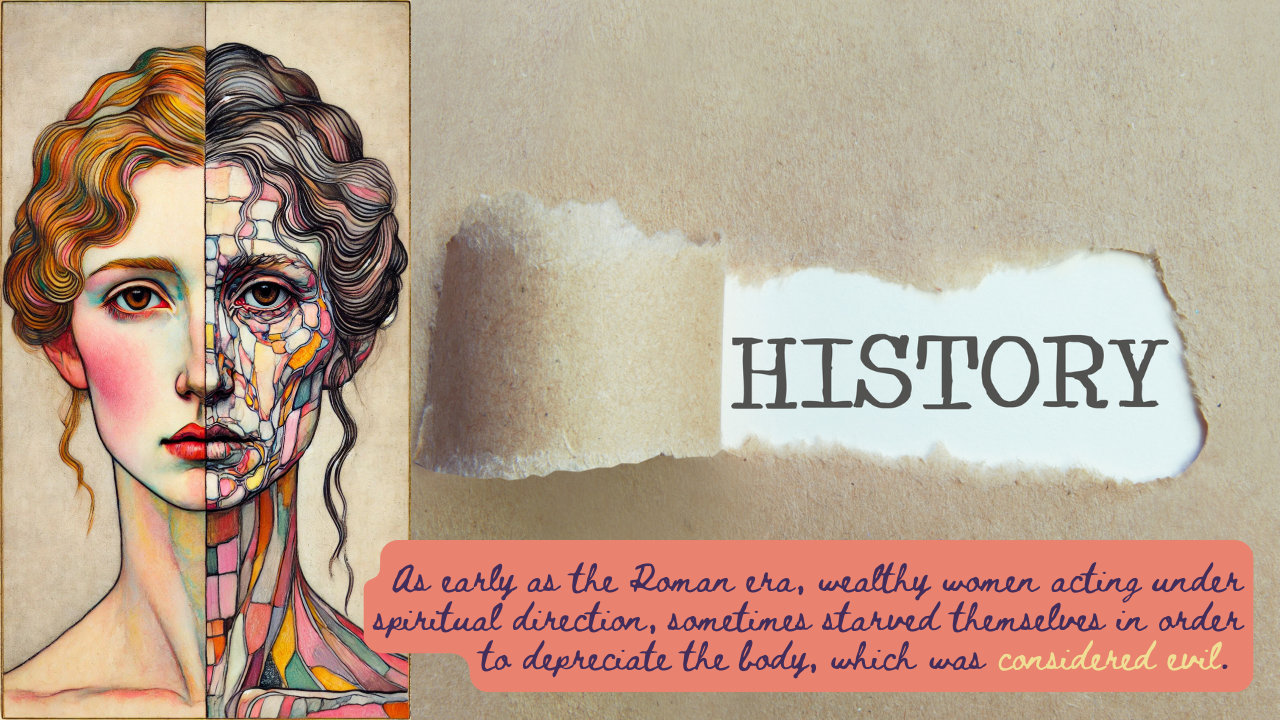
Accounts of extreme fasting appear as early as the Roman era, often framed through religious devotion, discipline, or moral purity rather than medicine. Wealthy Roman women sometimes starved themselves to suppress the body, which was considered morally suspect or evil.
The first recorded case of anorexia occurred in an upper class Roman woman who was a member of a spiritual group led by St. Jerome (347–420 C.E.).
Yet the term anorexia nervosa did not enter medical literature until 1873. Physicians such as Sir William Gull and Ernest Charles Lasègue independently documented patterns of extreme food restriction that could not be explained by physical illness.
Gull described the condition as largely affecting young women aged 16–23 and linked it to disturbances of the nervous system. He saw the source as “ego perversion”, and highlighted what he observed as psychological factors.
These early descriptions marked the beginning of medical recognition, but awareness remained largely confined to physicians.
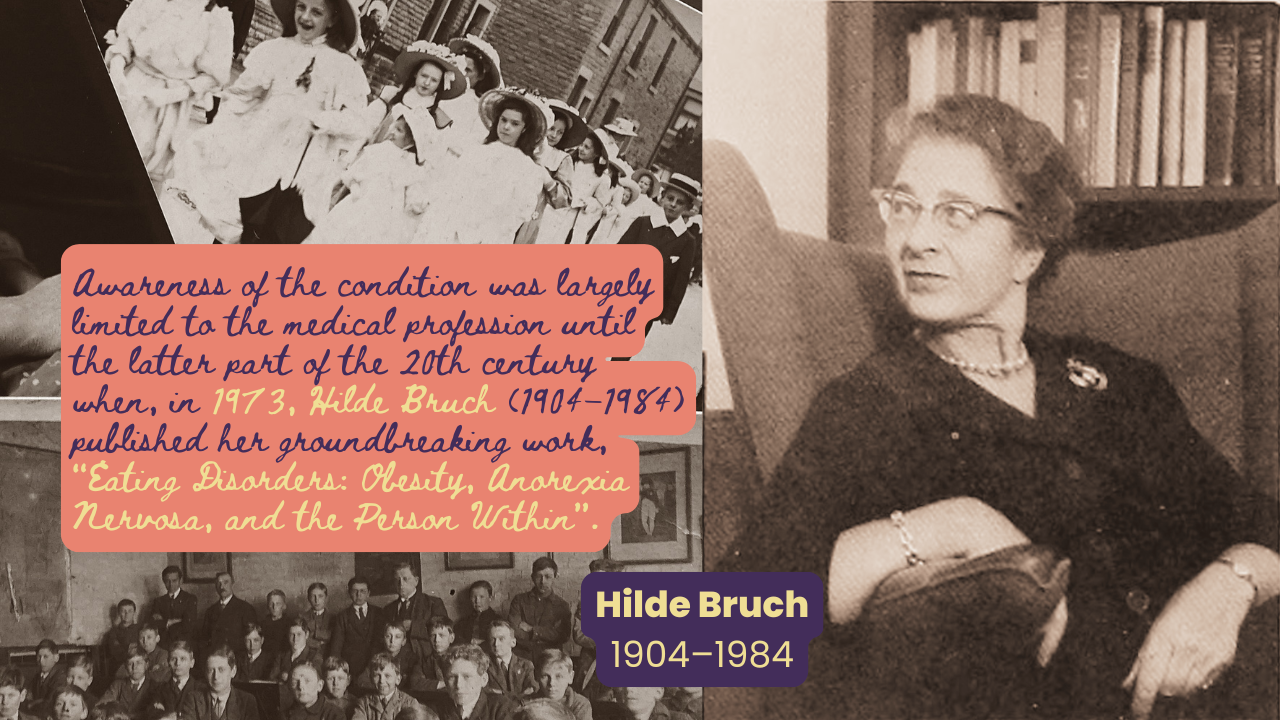
A century later, in 1973, psychiatrist Hilde Bruch helped bring eating disorders into broader clinical awareness with her landmark 1973 book, Eating Disorders: Obesity, Anorexia Nervosa, and the Person Within.
Documented in medical (and once spiritual) circles, eating disorders did not enter public discourse until half a century ago.
The Research Gap in Women’s Health
For much of the twentieth century, medical research was built largely around male biology.
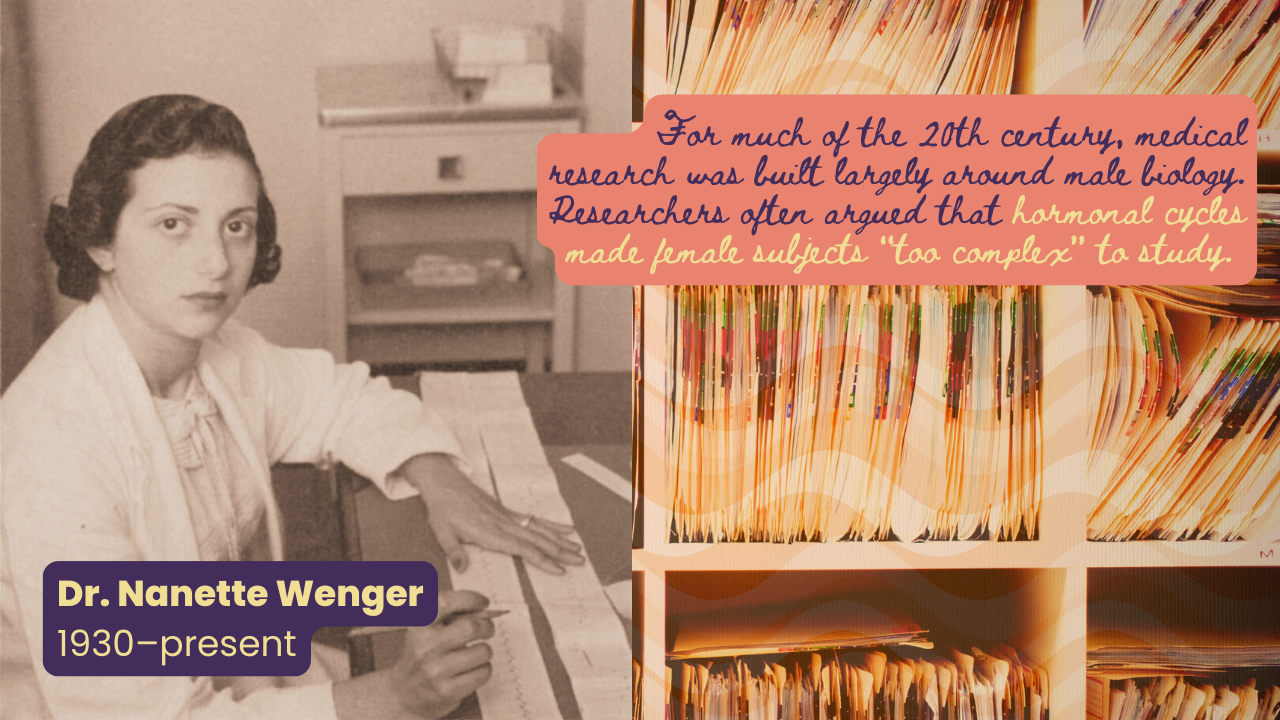
The tendency to study women only in relation to reproductive organs while treating the rest of the body as biologically interchangeable with men, was later described as “bikini medicine” by Dr. Nanette Wenger, an early pioneer of women’s cardiovascular health.
In 1954, Dr. Wenger was one of the first female graduates to receive her medicine degree from Harvard Medical School, and she is still going strong today at 95.
But even in 1977, researchers often argued that hormonal cycles made female subjects “too complex” to study, and the US FDA effectively excluded most women of childbearing age from early clinical trials, resulting in massive knowledge gaps.
It was not until 1993 when the US National Institutes of Health Revitalization Act required the inclusion of women and minorities (!) in clinical research as a condition of funding.
Still gaps remain.
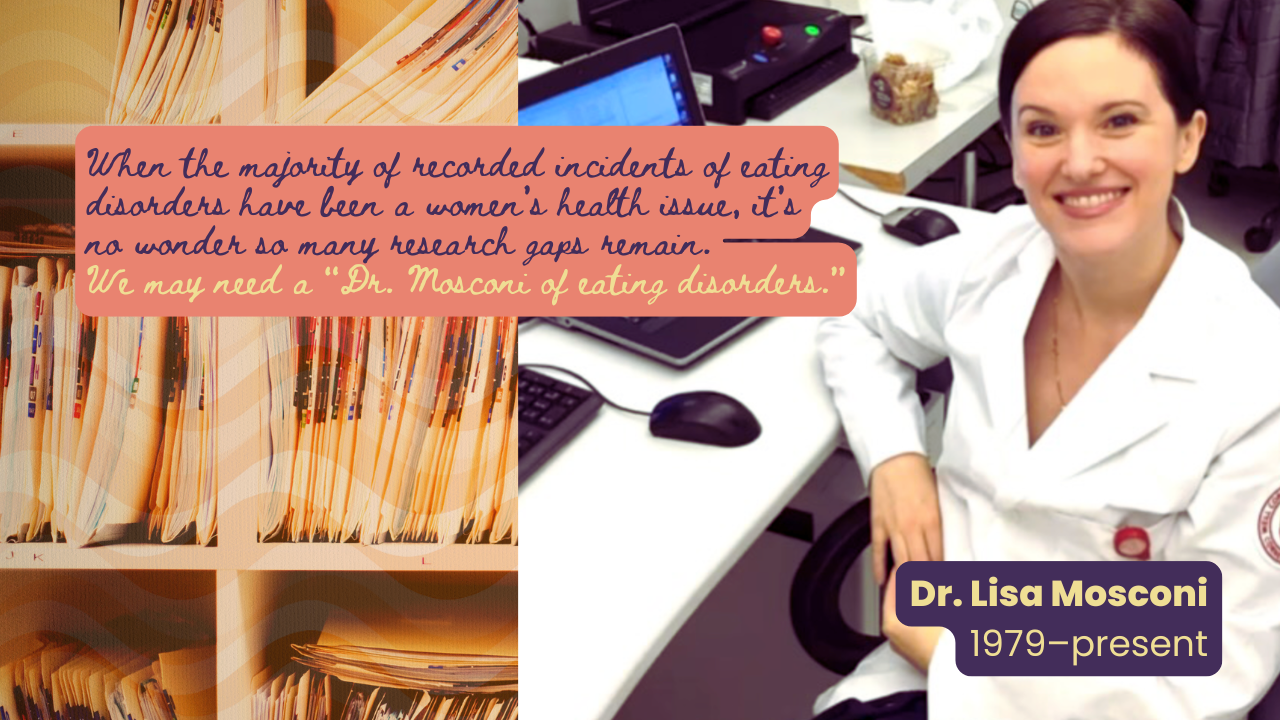
Only in the early 2010s did neuroscientist, Dr. Lisa Mosconi begin highlighting the lack of research on women’s aging hormonal health and brain function. Her work drew attention to the fact that two-thirds of people living with Alzheimer’s disease worldwide are women, raising questions about how hormonal changes across the female transition from pre-to post-menopause may influence brain health.
When the majority of recorded incidents of eating disorders have been a women’s health issue, it’s no wonder so many research gaps remain for the study of eating disorders.
Critical research gaps have shaped how conditions like eating disorders, and the majority who suffer them, have been misunderstood, measured, and treated.
NOTE: Boys and men are not to be left out of the discussion of eating disorders, more on their mental health below in brief, however - this is International Women’s Day.
NEW Findings in Genetics Research
For decades, eating disorders were framed primarily as psychological or cultural conditions. But increasingly, research suggests something more complex: a biological vulnerability interacting with lived experience.
Genes, brain circuitry, metabolism, and hormones all appear to play roles in how eating disorders develop.
Large genetic studies published in December 2025 found biological overlaps between eating disorders and other psychiatric conditions, including anxiety disorders, obsessive-compulsive disorder, depression, trauma-related disorders, and neurodevelopmental conditions.
Researchers must now work faster to understand why these overlaps occur.
Nature and Nurture
Genetics does not determine destiny. Certain genetic traits may increase vulnerability, but environmental influences (trauma, stress, culture, and social environments), remain powerful factors in whether or not an eating disorder develops.
Eating disorders exist at the intersection of biology, psychology, and environment.
In other words, the story is not “nature or nurture”. It‘s both.
This complexity is precisely why stronger research matters. Understanding biology more clearly, moves us closer to better treatment, and ultimately to what families and individuals seek: a path to recovery.
As complex as they are, eating disorders develop in social and cultural environments that shape how people* understand their bodies and their unique perspective on how they fit into the world.
*When 75% of eating disorders begin in childhood, the people we are referring to, are adolescents. Primarily — girls.

Consumerism’s Evolving Role in Eating Disorders
Children are vulnerable to the stories told by the adults around them.
Nearly a century ago, storytelling shifted from radio, a medium shaped by imagination, to the visual medium of television. Since the post-war 1940s, beauty standards have increasingly intersected with consumer culture.
Advertising industries, historically dominated by patriarchal values, built powerful economic models around appearance and aspiration.
As visual media expanded, beauty shifted away from the subjective eye-of-the-beholder and became more standardized. Commercially prescribed after:
1939: commercial television debuted at the New York World’s Fair, introducing a new generation of visual storytelling.
1993: the Mosaic web browser brought widespread online imagery to Gen X.
2003: social networks such as MySpace and Facebook reshaped how Millennials experienced media and advertising.
Across these mediums, “trending” beauty standards became associated with discipline, control, and success, passing from generation to generation.
At the same time, expectations placed on girls expanded: academic success, professional ambition, family roles, and physical appearance all became intertwined measures of worth.
The Modern Acceleration
One biological reality often overlooked is that women naturally carry higher body-fat percentages than men, a normal physiological difference, not a flaw.
Yet consumer messaging and pressures to conform have long suggested otherwise.
Since 2020, pandemic-era isolation, disrupted routines, and constant online exposure have intensified comparison among young people. Many clinicians report rising eating disorder rates among Gen Z adolescents.
Today’s youth live within arm’s reach of powerful storytelling tools, now amplified by algorithms and artificial intelligence.
And habits formed early can be difficult to break.
Fat Chance This is Just ‘Mental’ Illness
Eating disorders existed long before digital platforms. But modern technology has amplified social comparison at unprecedented speed, and in ways that previous generations of adolescents did not experience.
At the same time, new medical treatments have entered public conversation amplifying the conversation around weight stigma.
Fat stigma. And naturally, biologically, female bodies have higher body fat percentages than male bodies.
Enter GLP-1 medications, originally developed to treat metabolic disease yet increasingly advertised to consumers in relation to weight loss. Advertisers with hefty budgets are showing up across digital and traditional media spaces where any child can see that “weight loss” sounds important.
Pharmaceutical advertising in public spaces, where vulnerable children may easily encounter it, demonstrates how the “social” dimension of the biopsychosocial model shapes eating disorders. These conditions cannot be reduced to private psychological struggles alone.
The ripple effects of widespread GLP-1 influence on eating disorders is yet to be known.
The Unknowns Add Up
In Canada, researchers note major gaps in national surveillance data for eating disorders and disordered eating behaviours. Without consistent measurement, the true scale of the problem remains hidden.
Mental health recognition has also evolved slowly. The Canadian Public Health Association first adopted a mental health resolution in 1942, but Canada’s first national mental health strategy did not arrive until 2012.
This leaves plenty of room to improve our understanding of eating disorders, growing at a snail's pace in Canada.
Existing research suggests:
up to 1 in 4–5 women may experience an eating disorder by age 40
only about 25% of individuals seek treatment
the highest mortality rates occur among females aged 15–24
Our children and youth remain the most vulnerable.
And our adults (storytellers, educators, media leaders, researchers in hormonal health and neuroscience, and policymakers required to remove social stigmas around mental health) still shape the systems surrounding them.
Vulnerable kids suffering in silence with an eating disorder are up the creek without a paddle right now. Dropped in the deep end with floaties that popped.
From Celebration to Commitment
We may need a “Dr. Mosconi of eating disorders.”
Advancing women’s health research, improving mental health support, and strengthening policy frameworks will all contribute to better outcomes.
Progress in eating disorder care depends on a clear pathway, one that connects research through recovery.
When science, policy, and lived experience come together, the silence surrounding these illnesses can begin to change.
A future essay for International Men's Day
For more on how you can help move the needle for International Men’s Day (November 19, 2026), you might be eligible to take part in the Government of Canada’s “Men's and Boys’ Health Strategy” by participating in Health Canada’s questionnaire HERE.
Boys and men also experience eating disorders, including conditions such as muscle dysmorphia.
In recent years, online trends such as “looksmaxxing” and “auramaxxing” have introduced new appearance pressures among young men. Their experiences deserve our recognition and support.
At the same time, historical and statistical evidence remains clear: eating disorders have disproportionately affected women and girls.
by Penny Greening
Reframe Voices Society is female-founded, supported by a board strongly represented by women, and powered by a community of volunteers committed to awareness and education.